Selecting the right surface for a high-traffic athletic area often comes down to a balance between immediate performance and long-term structural resilience. For facility managers and homeowners alike, the shift toward modular systems has redefined how basketball courts are constructed and maintained.
The move away from traditional poured surfaces toward custom basketball court tiles reflects a broader industry demand for versatility, rapid installation, and superior shock absorption. Unlike monolithic floors, modular tiles allow for precise customization of layout, color, and performance characteristics.
To make an informed procurement decision, it is essential to understand the technical interplay between material science and athletic safety. This analysis examines the critical factors that determine the quality and longevity of modern sports flooring solutions.


Historically, basketball courts relied on hardwood or concrete, both of which present significant challenges. Hardwood requires intensive maintenance and environmental control, while concrete lacks the necessary energy return for athletes, often leading to joint fatigue and increased injury risks.
The introduction of PP (Polypropylene) and PVC-based modular systems solved these issues by decoupling the playing surface from the subfloor. These systems use a grid-like structure that allows for thermal expansion and contraction, preventing the cracks and warping common in traditional installations.
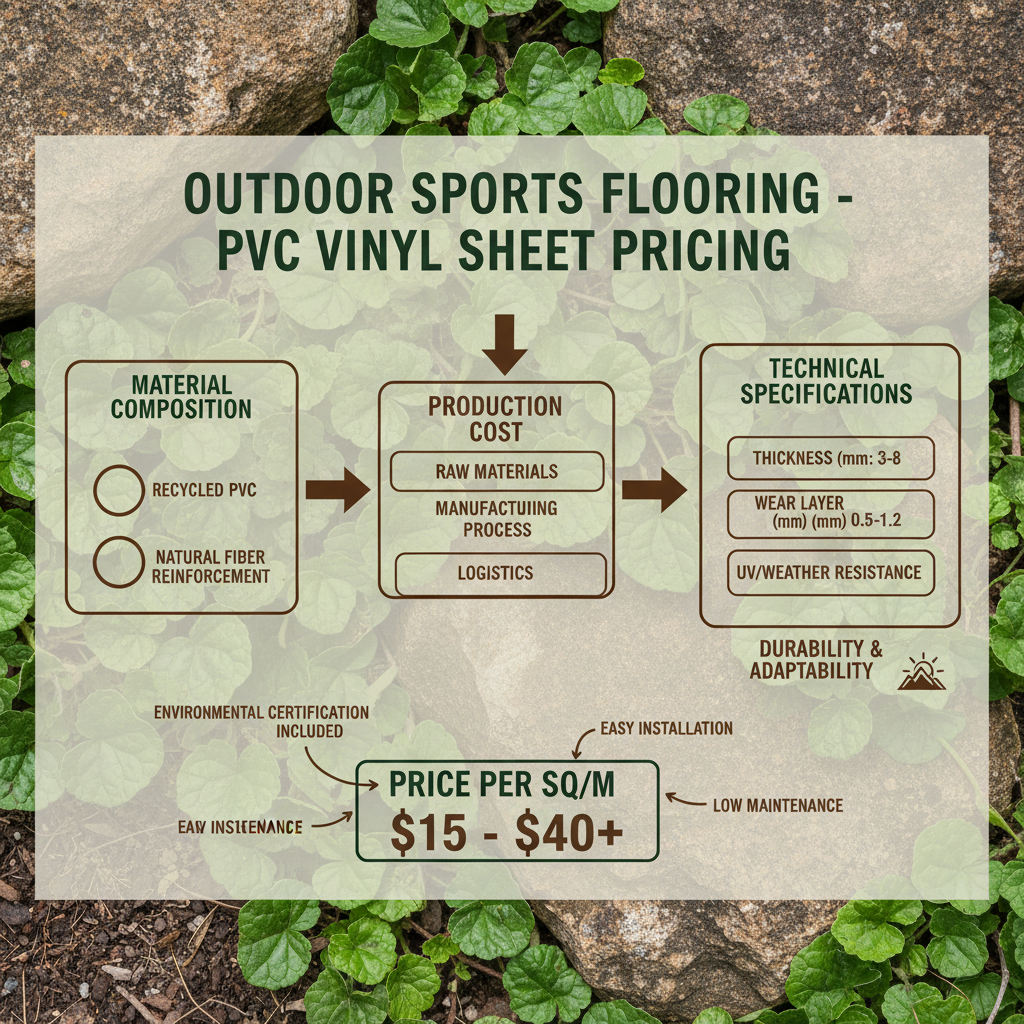
The integrity of a sports floor depends on its material composition. High-grade PVC raw materials combined with environmentally friendly plasticizers ensure that the surface remains non-toxic and stable. The inclusion of fiberglass mesh cloth is a critical technical detail; this internal reinforcement prevents shrinkage and deformation, extending the service life of the court even under extreme temperature fluctuations.
Surface traction is managed through specialized texture printing. A flat, non-reflective texture is essential not only for grip but also for visual comfort. By dispersing stadium lighting spots, the flooring prevents glare from affecting the vision of players and spectators, which is a key requirement for professional-grade environments.
Furthermore, the stability of the installation is often secured by a unique rubber base plate. Utilizing "hexagonal" texture adsorption technology, the flooring creates a strong grip against the subfloor, preventing the tiles from shifting during high-intensity lateral movements—a common failure point in lower-quality interlocking systems.
Athlete safety is measured by how a floor manages kinetic energy. When a player lands, the floor must absorb a portion of the impact to protect the musculoskeletal system. This is achieved through high-density copolymer foam layers that provide a balanced response—firm enough for speed, yet elastic enough for protection.
The primary goal of professional sports flooring is to minimize sports tremor, providing critical impact absorption for the ankles, meniscus, spine, and brain to reduce long-term degenerative injuries.
Beyond impact, anti-slip performance is a non-negotiable safety standard. By maintaining long-term elasticity and flexibility in the foam layer, the surface effectively reduces the risk of slipping and falling, allowing for freer and safer movement during rapid changes in direction.
Comparing different flooring types requires a qualitative assessment of key performance indicators. While traditional materials might excel in certain areas, modular systems typically offer a more balanced profile across installation speed, durability, and shock absorption.
The following index illustrates the relative strengths of various flooring solutions. These values are based on a conceptual framework comparing typical industry standards for indoor and outdoor sports environments.
In a typical industrial or municipal setting, such as a school gymnasium or a community center, the priority is often multipurpose utility. Modular tiles excel here because they can be quickly reconfigured or replaced in sections without tearing up the entire floor. For example, a facility might use a specific layout for basketball but need to adapt the space for volleyball or futsal.
For home installations, the focus shifts toward aesthetics and ease of maintenance. The combination of PVC transparent layers and oak-like textures allows for a professional look that is significantly easier to clean than hardwood, making it an ideal choice for residential multi-sport courts.
The industry is moving toward a "health-first" design philosophy. This involves the elimination of all harmful substances, such as formaldehyde and heavy metals, in favor of natural, environmentally friendly plasticizers. This ensures that indoor air quality remains safe for athletes who are breathing heavily during intense exercise.
We are also seeing a rise in "Silent Series" flooring, which focuses on reducing the acoustic impact of balls and footsteps. This is particularly important for urban environments where sports facilities are located near residential or office areas, reducing noise pollution while maintaining performance.
The integration of smarter materials that can adapt to different temperature zones without losing elasticity is the next frontier. This will allow for a seamless transition between indoor and outdoor court performance, regardless of the climate.
When evaluating custom basketball court tiles, buyers should avoid focusing solely on price. The total cost of ownership includes installation time, maintenance requirements, and the potential cost of athlete injuries due to poor shock absorption.
A robust selection framework involves assessing the flooring's structural stability (e.g., the presence of fiberglass mesh) and its compliance with international standards such as ISO, CE, or EN. These certifications provide an objective baseline for quality and safety.
Ultimately, the decision should be driven by the specific needs of the venue. A professional stadium requires different energy return properties than a kindergarten playground, making customization and material selection the most critical parts of the process.
| Evaluation Factor | Professional Stadium | Community Center | Residential Court |
|---|---|---|---|
| Shock Absorption | Critical (High) | Moderate | Standard |
| Installation Speed | Moderate | High | High |
| Maintenance Need | Professional | Low | Very Low |
| Durability Index | Extreme | High | Moderate |
| Customization Level | High (Branding) | Moderate | High (Aesthetic) |
| Certification Req. | BWF/FIBA/ISO | ISO/CE | Basic Safety |
Modular tiles are made from high-density polymers like PP or PVC and utilize an interlocking system. Unlike hardwood, they do not require sanding, refinishing, or strict humidity control. They offer superior shock absorption through built-in foam layers, reducing joint stress, and can be installed or replaced in a fraction of the time required for hardwood floors.
Fiberglass mesh cloth is embedded within the PVC layers to act as a structural stabilizer. It prevents the material from shrinking or expanding excessively when exposed to temperature changes. This ensures the floor remains flat and prevents the formation of gaps or bubbles, significantly extending the overall lifespan of the court.
Yes, specifically those designed as outdoor sport court tiles. These are engineered with UV resistance to prevent fading and a perforated design that allows rainwater to drain quickly. They are built to withstand extreme weather while maintaining the same anti-slip and impact-absorbing properties as indoor versions.
Sports tremor is reduced through the use of high-density copolymer foam layers. These layers act as a dampening system that absorbs the peak force of an impact and distributes it across a wider area. This protects the athlete's ankles, spine, and brain from the jarring vibration associated with hard surfaces.
Maintenance is minimal compared to other materials. Most PVC sports flooring only requires regular sweeping and occasional damp mopping with mild detergents. Because the surface includes a transparent wear layer, it resists scratches and stains, making it highly efficient for high-traffic commercial or school environments.
Professional-grade modular tiles are designed with health and safety as a priority. By using high-quality raw materials and avoiding harmful plasticizers, they remain free of formaldehyde and heavy metals. This makes them safe for use in kindergartens and school playgrounds where children have frequent skin contact with the floor.
The transition toward modular sports surfaces is more than a trend; it is a response to the need for higher safety standards and operational efficiency. By integrating advanced polymer science with ergonomic design, modern flooring provides a sustainable alternative to traditional materials.
Whether for a professional arena or a home project, the focus must remain on the technical specifications—shock absorption, structural stability, and material safety. Choosing a solution that balances these factors ensures a high-performance environment that protects athletes and lasts for years.